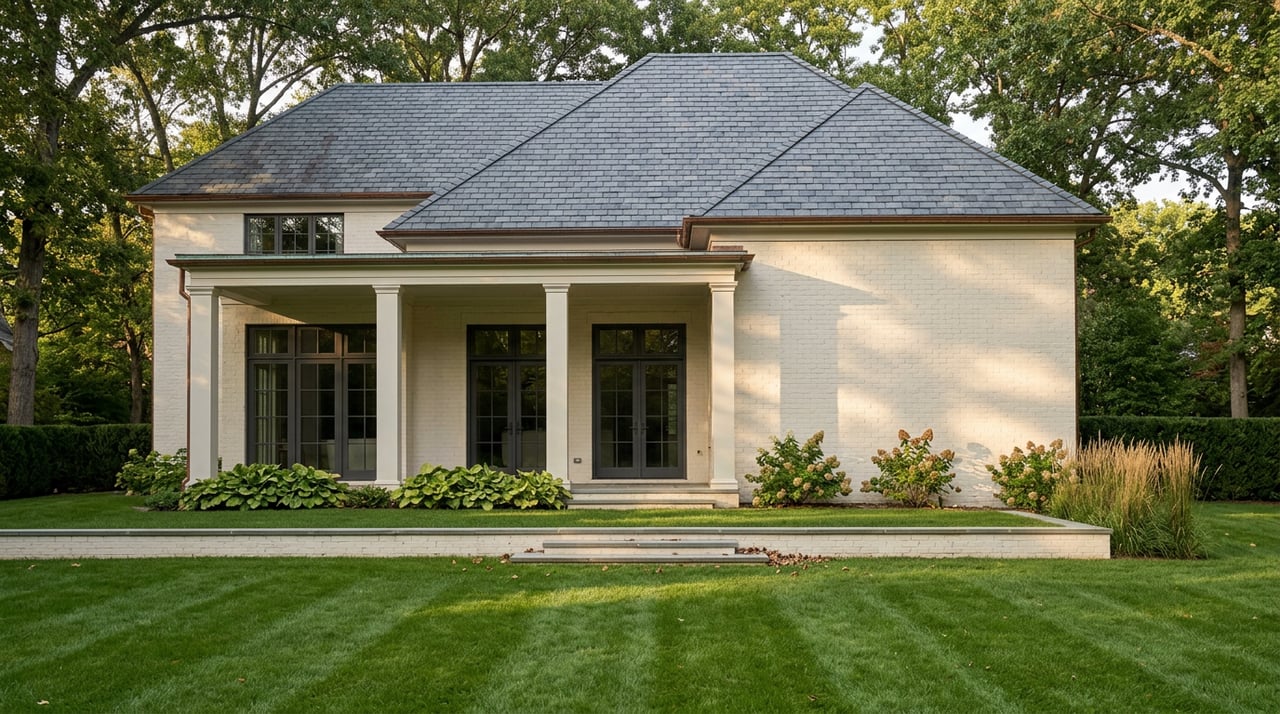
Drive the loop from State Line Road through the heart of Mission Hills on any weekday evening and you'll pass more limestone gateposts than you can count, three private clubhouses, and exactly zero places to buy a cup of coffee. That's not an oversight. It's the design. And this particular summer, for the first time in over a century, the city is quietly deciding whether that design gets its first real addition.
If you already live here, you know the rhythm: golf in the morning, quiet streets by afternoon, and a calendar that runs on club membership rather than storefronts. But 2026 has handed residents three things happening at once that don't usually line up. A national-caliber golf event landed on the fairways down the street. The city's one public gathering space just hosted its summer concert series. And the property purchased for $3.2 million less than a year ago still has an undecided future. Put those three together and you get a clearer answer to a question longtime residents ask more than newcomers might expect: what is Mission Hills actually for, day to day, if it isn't retail?
The City With No Downtown
Mission Hills was platted by J.C. Nichols starting in the 1920s as part of his Country Club District, and the plan never included a Main Street. A recent newspaper column on the city's land dilemma put the inventory plainly: houses, three country clubs, a city hall, and a church. That's the whole commercial and civic footprint of a city that Forbes has ranked the third wealthiest municipality in the country. There is no strip mall, no coffee shop, not even a gas station.
That absence isn't a gap to be filled casually. It's zoned that way. According to AOL News, the land under the old church at 6400 State Line Road has been restricted to religious or governmental use since Nichols' original platting. That restriction is exactly why the city stepped in rather than letting the property go to a private buyer with different plans.
This Summer, the Fairways Are the Local Economy
If Mission Hills has a commercial season, it's golf season, and this year it had a marquee event to show for it. The Kansas Amateur Championship ran July 13 through 19 at Mission Hills Country Club, one of three private clubs inside city limits alongside Kansas City Country Club and Indian Hills Country Club. For a city with no ticketed events, no farmers market, and no downtown block party, a state championship at the club up the street is about as close as it gets to a hometown spectacle. Residents didn't need a storefront to feel it. They needed a tee time or a spot along the ropes.
The Sunken Garden Is the Town Square
The closest thing Mission Hills has to a public square sits just north of 63rd Street: the Sunken Garden, a Nichols-era park that underwent a full restoration after engineering issues tied to the region's weather swings had taken a toll on its water features and plantings, according to the outdoor design firm that handled the restoration work. It's a small, quiet space, but it's the city's one shared outdoor room, and this summer the city put it to work again. On June 12, residents were invited down for live music from Sean McNown and food from Crave KC Tacos, an evening billed through the city's own event page as the closest thing to a block party the calendar offers.
Here's the detail that says more about the city than the concert itself. For August 5, the city promoted a free ice cream social with the Prairie Village Police Department, but the location is Clementine's Ice Cream Shop at 6966 Mission Road, which sits across the line in Prairie Village. Mission Hills doesn't have an ice cream shop to host it in. When the city needs a storefront for a community event, it borrows one from the neighbor next door. That's not a knock on either city. It's the clearest evidence yet of just how deliberately Mission Hills has stayed unbuilt.
If you're curious how that scarcity of commercial space shapes property values and buyer expectations here compared to nearby Leawood or Prairie Village, our micro-markets breakdown digs into how little inventory, of any kind, changes the math.
The Property With an Undecided Future
Which brings us to the story most residents have been half-following since last winter. In December, the Johnson County Post reported that the city had closed on the former First Lutheran Church property at 6400 State Line Road for $3.2 million the previous August, with no fixed plan for what comes next. City Administrator's minutes from that period confirm the same timeline: the purchase closed in August, funded through temporary notes, with ongoing conversations between the city, church leadership, and the church's affiliated early education center about an orderly transition.
A follow-up column published this June by AOL News went further, describing the former church property as the city’s last major property whose future remained undecided, in a city that has essentially the same footprint it did a century ago. Mayor Andy Weed, quoted in that piece, explained the city's thinking simply: "We just finally came to the conclusion that we wanted to control the destiny of that property." The alternative, city leaders worried, was watching a private buyer take the corner, where zoning only permits religious or governmental use.
Owning the lot has turned out to be more complicated than buying it. The same column reported that the building carries roughly $3 million in deferred maintenance just to keep functioning, and bringing it fully up to code, including accessibility upgrades and mechanical systems, could run closer to $10 million. There's also a cell tower hidden inside the steeple, a detail that will factor into whatever the city decides to do with the structure itself. Mayor Weed has said a grand new city hall isn't where this is heading, and that some modest expansion of civic space is more likely than not, but the city has been gathering resident input through public listening sessions rather than announcing a final direction.
For a city built entirely around large private lots, this is a genuinely rare civic moment. Mission Hills doesn't add parcels. It has 1,300 or so homes and three private clubs, and the last time the map changed in any meaningful way was when Nichols drew it. Whatever gets decided for that corner, green space, a scaled-down amenity, or something closer to what's there now, will likely be the only new addition to the city's public inventory for a long time.
What Residents Are Actually Watching For
None of this changes what Mission Hills is at its core: a place where the social contract runs through club membership and quiet streets rather than commerce. But this summer is a useful reminder that the character isn't accidental. It's maintained on purpose, one zoning restriction and one listening session at a time. If you've ever wondered why a city this affluent has never added a coffee shop, the answer is that residents and officials alike have made a habit of choosing restraint over convenience, right down to this year's decision about the one lot left to decide.
For homeowners who want to understand how that restraint shows up in resale value, architectural covenants, or how Mission Hills compares to its country club neighbors, our team keeps a close eye on these shifts alongside the broader Mission Hills neighborhood guide and our earlier look at the architectural character that Nichols built into every block here.
Curious what any of this means for your own property, whether you're weighing a move or just want a clearer read on where values stand this year? Bash KC tracks these hyperlocal shifts as closely as the market data, and we're always glad to talk through what we're seeing. Request your personalized home valuation whenever you're ready for that conversation.
This article is general information, not legal, tax or financial advice. Consult a qualified professional about your situation.