Every year, a conservator walks the public statuary in Mission Hills and writes a condition report on each piece. In the 2025 year-end report, one of the Verona Columns stood out. Compared with the photos from earlier years, one column base looked slightly slanted. No piece had fallen and nobody had been hurt. The only sign was a small difference between two photographs.
That difference closed the park. On September 1, 2026, the City of Mission Hills stopped issuing photography permits for Verona Columns Park, and the city expects it to stay closed until the fall of 2027. The park is the backdrop for homecoming and prom photos at SM East, and The Harbinger reported that students have had to move those plans elsewhere. The closure came out of a routine yearly process that caught a problem early, and the same process is driving almost every repair underway in Mission Hills right now.
How a lean in one photo turned into a column on the ground
The columns were a gift from J.C. Nichols, dedicated in 1925. Their last major restoration was a community effort completed in 1986, nearly 40 years ago. Since then, the city's annual inventory has been the main check on how they are holding up. This is the order the city laid out in its August 26 restoration notice and later updates:
- 2025 year-end report. The conservator records changes in the columns compared with previous years' reports.
- April 2026. The conservator raises a concern about the integrity of the bases with the Park Board and urges the city to investigate further.
- June 2026. Strata Architecture, the firm that earlier restored the fountain at Verona Columns, finishes a preliminary assessment.
- July 2026. The City Council approves a contract for Strata to do an in-depth, non-destructive investigation, which means taking apart one full column and a section of the retaining wall.
- September 1, 2026. The park stops accepting photography permits.
- September 15, 2026. The western column, the one closest to Overhill Road, is scheduled for disassembly.
- Winter 2026–27. The investigation's findings shape the restoration design.
- Spring 2027. Construction is expected to start, with the park expected to stay closed until fall 2027.
By mid-October, The Harbinger reported that a column had come down for the investigation. The paper also reported that the columns are not in immediate danger of falling, although the material is deteriorating. The 2027 dates are the city's forecast. The design depends on what the dismantled column showed, so the construction schedule depends on it too.
The problem is water, and it starts uphill
Strata's preliminary assessment found that the stone itself was not the main cause. The firm traced the deterioration to long-term moisture getting in behind the retaining wall, combined with poor drainage and the yearly freeze-thaw cycle. Those conditions moved the wall assembly and wore down the bases, the capitals and the decorative finishes on the columns. In The Harbinger's account, experts think water running down the hill above the columns is pressing against the retaining wall and causing the slight lean.
That diagnosis explains why the restoration is large. Strata proposed a phased rehabilitation that covers drainage, waterproofing, structural stability and selective reconstruction, with the goal of keeping the columns' historic character and stopping further damage. Replacing a worn capital would not fix a wall that is being pushed by groundwater. The work has to start below the columns.
City Administrator Jennifer Lee described the stakes plainly to The Harbinger:
"It's an iconic piece of the city and everybody wants to make sure that we're handling it correctly."
Why the city has a conservator in the first place
Verona Columns is the best-known piece in a much larger collection. A 2016 city community profile describes the neighborhood's parklets as holding fountains, statuary, urns and sculpture dating to 1923. They sit in medians, on greens at the street edge, at intersections and at entry points around the city. A city with that much carved stone spread across small islands of land cannot wait for someone to report a crack. The annual condition and treatment report exists so that slow changes like a gradual lean show up on paper before they show up on the ground.
The same idea shapes the city's budget. When the City Council approved its 2027 budget on September 14, it kept the mill levy flat and named the Verona Columns among its capital priorities, along with Rainbow Avenue, Willow Avenue, Overhill Road and an evaluation of the pedestrian bridge. The columns are on the list with streets and a bridge. The city budgets for the landmark the same way it budgets for infrastructure.
The same inspect-first pattern, across the city
Lee's comments to The Harbinger about the city's construction season ran along the same lines. "We're thankful that our process of annual inspection and conservatorship resulted in us taking this extra step," she said. The Harbinger also reported that the Park Board reviews the condition of the city's islands every year. Most of what is on the city's current project list follows the same steps: inspect, study, then build.
| Project | Where | Status this fall |
|---|---|---|
| Low-water crossing repair and culvert replacement | Indian Lane north of 63rd Street, at the Kansas City Country Club entrance | Complete; road reopened September 25 |
| Engineering study of the crossing and walls | 63rd Street and Indian Lane | Approved by the City Council in September |
| Dredging and western wetland bench reconstruction | Eisenhower Pond, near Tomahawk Road and 63rd Street | Planned for late fall 2026 |
| Stormwater and street work | Belinder Circle toward 69th Street, then 69th Street to 71st Terrace | Planned for next year |
| Street projects | Rainbow, Overhill and Willow | Planned to start next year |
| Verona Columns rehabilitation | Verona Columns Park near Overhill Road | Design over winter; construction expected spring 2027 |
Indian Lane shows what the repair cycle looks like
Indian Lane is the one project on that list that is already finished, and it shows how the whole cycle tends to run. The city's July 24 notice expected a culvert project of about six weeks starting August 10. During the closure, the Kansas City Country Club's main entrance could be reached only from Mission Drive. The city combined two jobs. The first repaired erosion damage at the low-water crossing near the club entrance. The second replaced a large, failing metal pipe under the road with a larger concrete channel that carries stormwater from the country club toward Brush Creek. Crews closed one section at a time, and the road reopened on Friday, September 25. That is close to the six weeks the city first estimated.
The job did not end the city's attention to that crossing. At its September meeting, the Council approved an engineering study of the 63rd Street and Indian Lane crossing and its walls. The study will look at ownership, stream flow, sediment, and effects on both the wall and the crossing. The order matches Verona's: fix what has failed, then study why before the next round of work.
Eisenhower Pond is next
The next visible work is at Eisenhower Pond, near Tomahawk Road and 63rd Street. The planned work removes sediment and rebuilds the pond's western wetland bench, starting in late fall 2026. The final approval of the wetland bench planting plan was on the October 6 Park Board agenda. According to The Harbinger, residents near the upcoming construction should expect street closures in late 2026 and into 2027.
What still happened at the columns this year
Closing the park to photo permits did not take Verona off the city's social calendar. The city's restoration notice confirmed that the columns would still be the backdrop for Diner à Verona 2026. The event notice set the evening for Saturday, September 19, from 6 to 10:30 p.m. Residents brought their own dinner, the city supplied music, tables, chairs and linens, and registration was $25 per person. The city sees a difference between a planned resident gathering at the edge of the park and a steady stream of photo shoots on stonework that is being taken apart.
Next on the calendar is the annual Tree Lighting at City Hall on Sunday, November 22, from 5:15 to 7 p.m., with caroling, cookies, cocoa and a visit from Santa. Mission Hills has no downtown, a point covered in our earlier look at the city's summer of golf, ice cream and one empty lot. So its shared spaces are the parks, the islands and City Hall, and the stone pieces in those spaces are what the conservator inspects every year. For anyone who knows the columns from family photos taken there, the city forecasts the restored columns will be back in fall 2027, after a rehabilitation planned to address drainage, waterproofing and structural stability.
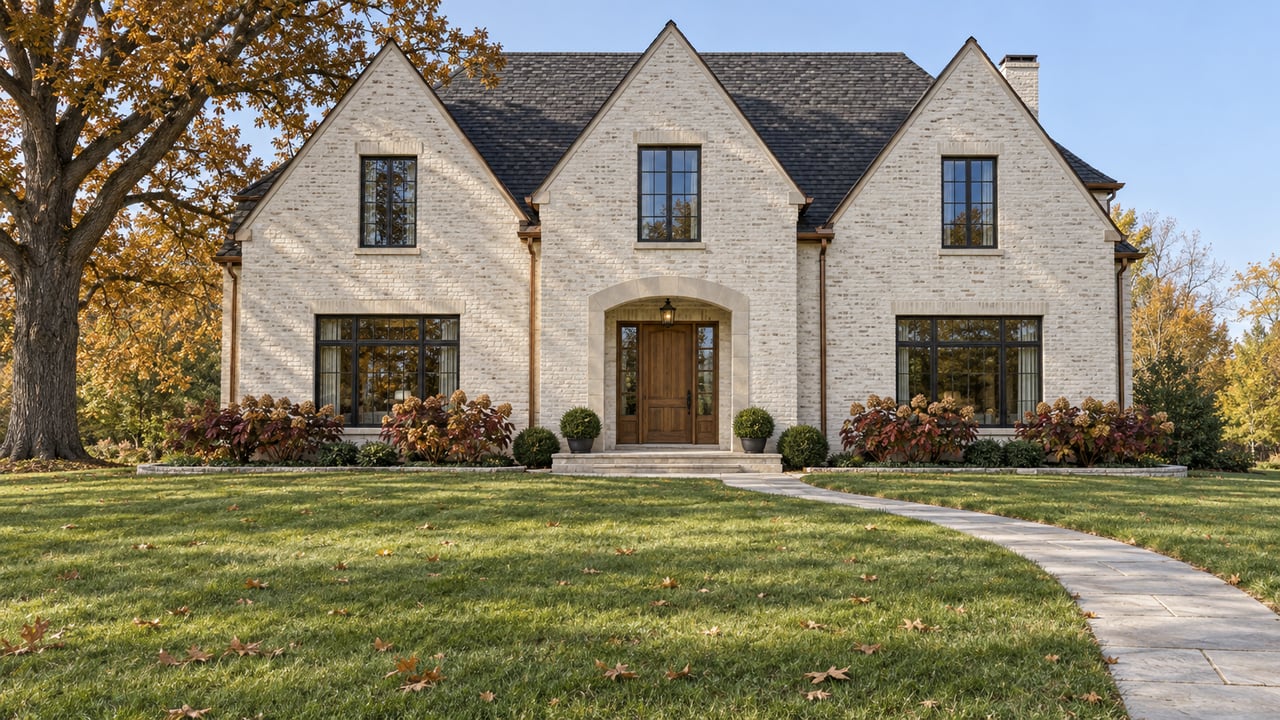
Older stone and older houses in Mission Hills have the same problem with water and time, and the architecture that defines the city's homes reflects that. If you own a home here and want to know how its age, upkeep and setting affect its value today, Bash KC is glad to walk through it with you. Request your personalized home valuation, and Andrew Bash and Katherine Lee will give your house the same attention the city gives its landmarks.